
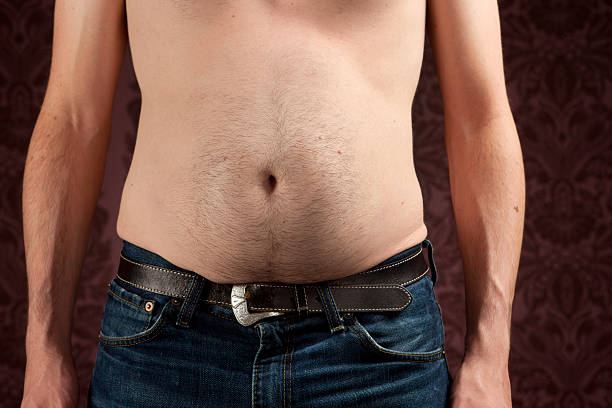
Lose Belly Fat for Men Over 40: What Actually Works
If you’re trying to lose belly fat as a man over 40, you’re not alone. Many men find that the strategies that worked in their 20s and 30s stop working, even when they’re training hard and eating well.
Yet the belly fat refuses to disappear.
The good news?
You’re probably not broken.
You’re just fighting different battles than you were 20 years ago.
1. You’re Losing Muscle Without Realising It
From your 30s onwards, muscle mass naturally declines if you don’t actively train to maintain it.
Less muscle means:
Lower calorie burn
Reduced insulin sensitivity
Slower recovery
Easier fat gain
This is why strength training becomes even more important after 40.
Instead of trying to burn calories with endless cardio, focus on building and maintaining lean muscle.
2. Stress Is Keeping You Stuck
Most men I coach aren’t lazy.
They’re busy.
Running businesses.
Managing careers.
Supporting families.
Living under constant pressure.
Chronic stress affects sleep, recovery, hunger and food choices, making fat loss much harder.
Before adding another workout, ask yourself:
Are you recovering well enough to actually benefit from your training?
3. You’re Exercising More Than You’re Recovering
More isn’t always better.
One of the biggest mistakes I see is men trying to outwork poor recovery.
Recovery includes:
Sleep
Nutrition
Mobility
Walking
Stress management
Recovery is where your body actually adapts.
Without it, progress stalls.
4. You’re Eating “Healthy”-But Not Strategically
Healthy food isn’t automatically fat-loss food.
Many men unknowingly consume:
Too many liquid calories
Oversized portions
Not enough protein
Random weekend blowouts
Consistency beats perfection.
A sustainable eating plan will outperform an extreme diet every single time.
5. Your Training Doesn’t Match Your Lifestyle
This is where most fitness programs fail.
They assume everyone has:
A commercial gym
90 minutes every day
Unlimited motivation
Real life doesn’t work like that.
The best program is the one you can actually follow.
Whether you train at home or in a gym, with 30 minutes or 60, your training should fit around your life-not the other way around.
Common Mistakes Men Make
❌ Doing more cardio instead of building muscle
❌ Chasing quick-fix diets
❌ Skipping recovery
❌ Starting over every Monday
❌ Following programs built for 20-year-olds
Key Takeaways
If you’re over 40 and struggling to lose belly fat:
Prioritise strength training
Eat enough protein
Improve sleep
Reduce unnecessary stress
Follow a program built around your lifestyle
Stay consistent long enough for results to compound
The goal isn’t to punish your body.
It’s to build one that performs for decades.
Frequently Asked Questions
Why is belly fat harder to lose after 40?
Because muscle naturally declines, recovery slows, daily activity often decreases, and stress levels tend to increase.
Should men over 40 do cardio every day?
No. Strength training should remain the priority, supported by regular walking and moderate cardiovascular exercise.
Can you lose belly fat without going to a gym?
Absolutely. Effective strength training can be done at home with minimal equipment when programmed correctly.
How long does it take to lose belly fat?
Everyone is different, but most men begin seeing noticeable progress within 8-12 weeks when training, nutrition and recovery are consistent.
Final Thoughts
Losing belly fat after 40 isn’t about finding the perfect workout.
It’s about building habits that work with your lifestyle.
Train consistently.
Recover properly.
Eat with purpose.
Stay patient.
The men who achieve lasting results aren’t the ones who go the hardest-they’re the ones who stay consistent.
Ready to Perform at Your Best?
If you’re a busy man who wants to build a stronger, leaner body without living in the gym, I’d love to help.
Email “THRIVE” to matt@mattcfox.com to apply for my 1-on-1 Performance Coaching, and let’s build a plan around your life-not the other way around.
Link to guidance from the American College of Sports Medicine (ACSM) on resistance training and healthy aging.


0 Comments