

Home Workout for Men: Why You Don’t Need a Gym
Quick Answer
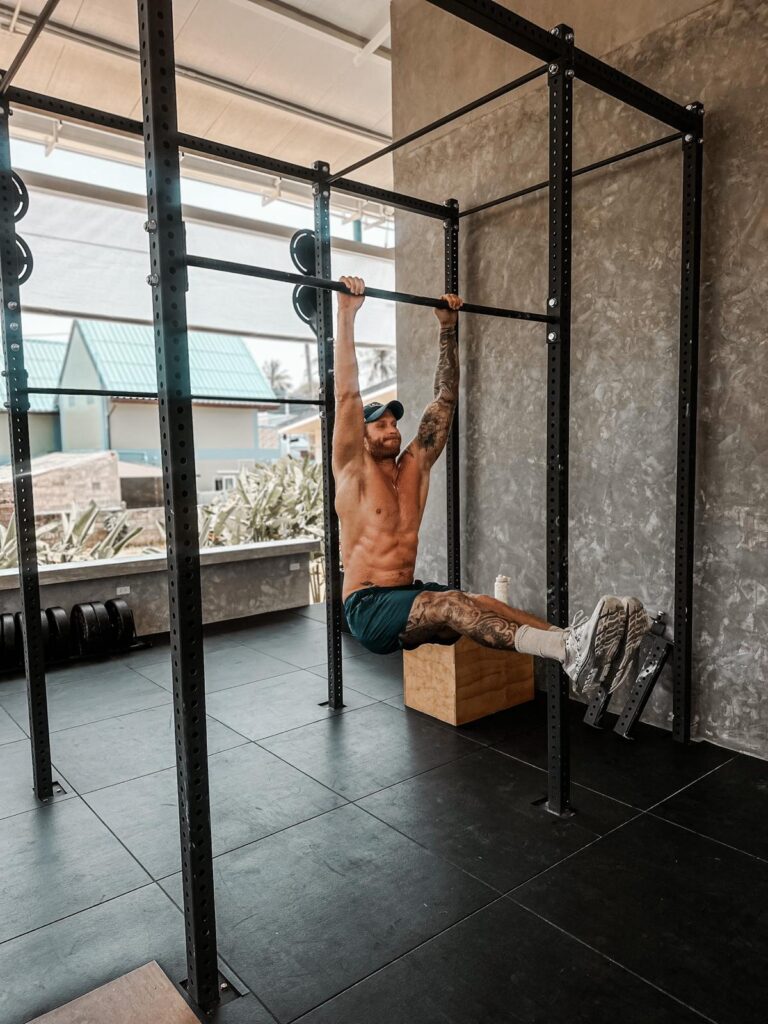
A home workout for men can be just as effective as training in a commercial gym when it focuses on progressive overload, functional movement and consistency. For most people, a pull-up bar, a kettlebell and your own bodyweight are all you need to build strength, improve fitness and develop a lean, athletic physique.
The Fitness Industry Has Made Exercise More Complicated Than It Needs to Be
Walk into almost any commercial gym and you’ll see hundreds of machines, dozens of cable attachments and people following complicated routines they found online.
It’s easy to believe that’s what fitness requires.
I disagree.
After more than two decades coaching everyone from professional athletes to busy dads and business owners, I’ve learned that the people who stay fit for years aren’t the ones with access to the most equipment.
They’re the ones who make training simple enough to stay consistent.
That’s why I built my coaching philosophy around functional training rather than chasing the latest fitness trend.
Simple doesn’t mean easy.
Simple means sustainable.
Your Body Doesn’t Know Where You’re Training
One of the biggest misconceptions in fitness is that muscles somehow respond differently because you’re inside a commercial gym.
They don’t.
Your body responds to tension.
Movement.
Progressive overload.
Recovery.
Whether you’re performing push-ups in your living room, pull-ups in your garage or kettlebell swings in your backyard, your muscles adapt to the work you ask them to do.
That’s why a well-designed home workout for men can produce incredible results without rows of expensive machines.
Functional Training Builds Strength That Transfers to Real Life
Many traditional gym routines isolate individual muscles.
Functional training focuses on movement.
Instead of asking,
“How do I train my biceps?”
Ask,
“How do I become stronger, fitter and more capable?”
That’s where movements like these shine:
- Push-ups
- Pull-ups
- Squats
- Split squats
- Lunges
- Carries
- Rows
- Kettlebell swings
- Overhead presses
These movements train multiple muscle groups together while improving coordination, balance, stability and mobility.
More importantly, they prepare your body for everyday life—not just looking good in front of a mirror.
You Need Less Equipment Than You Think
If someone asked me to build the most effective home gym possible, I’d start with just three things:
- Your bodyweight
- A pull-up bar
- One kettlebell
That’s enough to train every major movement pattern while progressively getting stronger.
It’s also why I created Bodyweight Built—to help people follow structured programs using minimal equipment instead of relying on expensive gyms or complicated routines.
More equipment doesn’t automatically create better results.
Better programming does.
Consistency Always Beats Complexity
One of my core beliefs is simple.
The best workout isn’t the perfect workout.
It’s the workout you’ll still be doing six months from now.
Life gets busy.
Kids get sick.
Meetings run late.
Travel happens.
If your training only works when everything goes perfectly, it isn’t built for real life.
That’s why I encourage people to create systems rather than depend on motivation.
A 30-minute session completed four times every week will outperform an inconsistent two-hour routine every single time.
0 Comments