
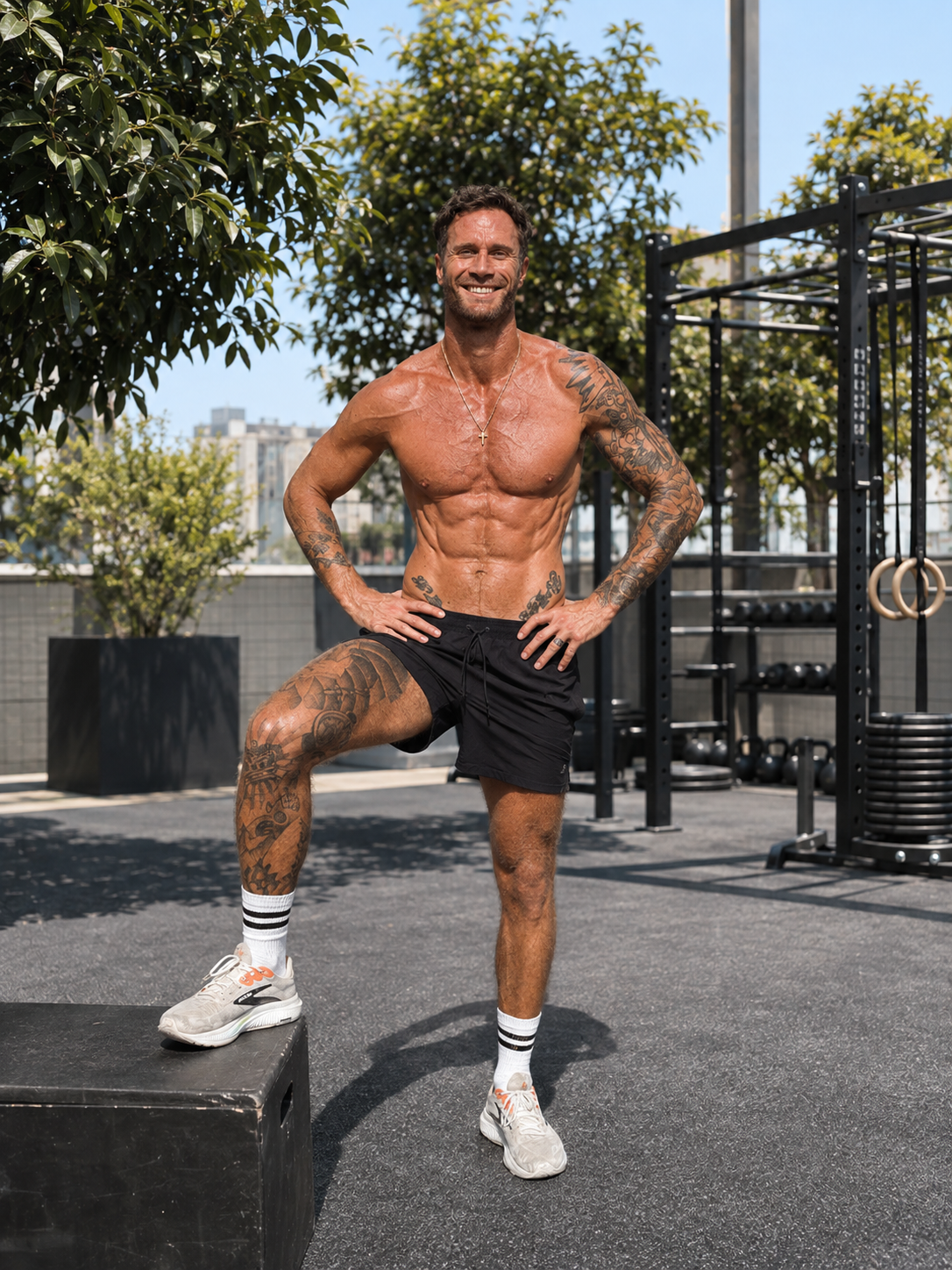
A few weeks ago we packed up our life in Phuket and moved to Dubai.
Me, Wilda and our two boys. New country, new home, new schools, new everything.
I’ll be honest with you. The last four weeks have been some of the most stressful we’ve had in a long time. Not bad. Just a lot.
So this one’s a bit different from my usual posts. It’s part story, part practical. Why we moved, what nobody tells you about relocating with a family, and how to stay healthy during a move when your whole routine gets flipped upside down.
Quick answer: how do you stay healthy during a move?
Shrink everything down. Short workouts, simple meals, protect your sleep where you can, and get outside and move every day.
You’re not chasing personal bests while you’re living out of boxes. You’re keeping the habit alive, so you’re not starting from zero when life settles down.
That’s the short version. Here’s the longer one.
Why we left Thailand for Dubai
We lived in Phuket for three years. We built a house there and set our whole life up there. And I loved it. I still do. I miss it.
So why leave?
There were a lot of reasons. Dubai is a new opportunity for me, for the boys and for our family, on a lot of different fronts. Some of it is personal and family health related, and I’ll leave that part there.
What I will say is this. Sometimes you have to recognize that you need to change your environment for the greater good. Even when it’s hard. Even when you love where you are.
Never say never
The biggest lesson from all of this? Never say never.
Nothing has to be forever. Don’t cement anything in your life, because things can change quickly. I’ll still go back to Thailand. But right now, this is where we need to be.
What moving countries with kids actually takes
Here’s what I underestimated. Settling in takes so much more than you think.
The flights and the packing are the easy bit. Then comes everything else:
- New schools for the boys
- Finding a new home and setting it up
- Getting used to a whole new environment
- Insurance
- Cars
- Endless admin. Forms, appointments, then more forms.
With two young kids, every one of those jobs takes longer. And it all lands at the same time.
That’s the part nobody puts in the highlight reel. If you’re in the middle of a move right now and you’re feeling flat, you’re not doing it wrong. It’s just hard.
The best part about Dubai so far
It’s not all paperwork though.
The opportunity here is massive. There’s so much to do and so many people to meet. It’s friendly and it’s clean, which is a big shift from what we were used to in Thailand.
And I’m around a lot of people on the same wavelength. People building things, training, trying to get better. That kind of environment rubs off on you.
How to stay healthy during a move
This is where my coaching hat goes on.
When life gets chaotic, training is usually the first thing to go. Moving house, a new baby, a new job. The thinking is “I’ll start again when things calm down.” Then weeks turn into months.
The goal during a move isn’t progress. It’s keeping the habit alive. Here’s how I’d do it.
1. Make your workouts smaller, not zero
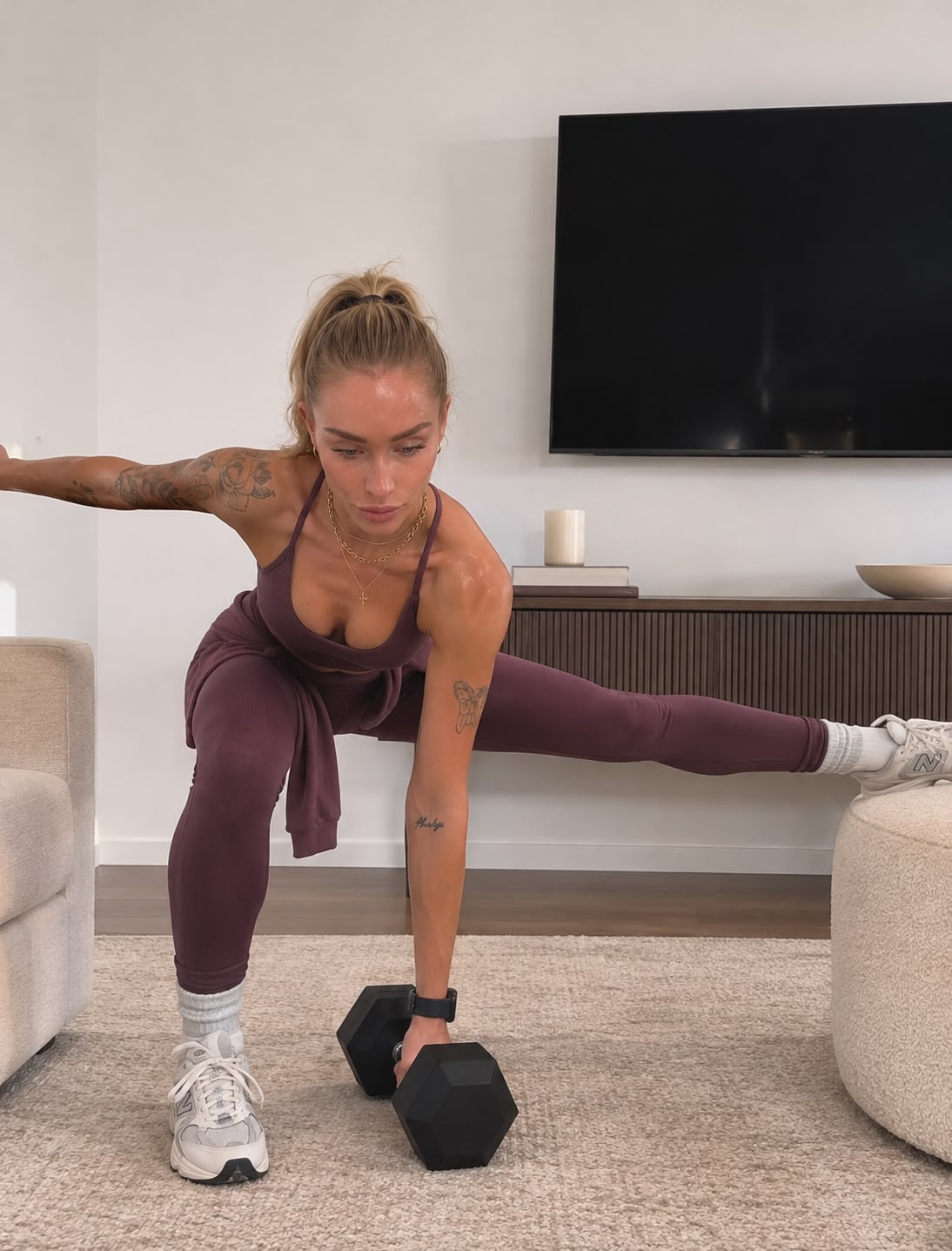
You don’t need an hour and you don’t need a gym. Twenty minutes in a half unpacked living room counts.
The CDC recommends adults do muscle strengthening at least two days a week, and says you can break your activity into smaller chunks. Some is better than none.
A simple session you can do anywhere:
- Squats x 15
- Push-ups x 10 (knees or hands on a bench is fine)
- Reverse lunges x 10 each leg
- Plank x 30 seconds
Rest a minute between rounds and do 3 or 4 rounds. Done.
If you’ve got a kettlebell or a pair of dumbbells handy, great. If they’re still in a shipping box somewhere, your own bodyweight does the job. That’s exactly why we built Bodyweight Built the way we did. If you want more on training with no equipment, start with my complete guide to bodyweight training.
2. Use training as your pressure valve
When everything feels like admin, training is the one thing you fully control.
According to the CDC, a single session of moderate to vigorous activity can reduce short term feelings of anxiety in adults. Twenty minutes of moving can change how the rest of your day feels.
3. Walk everywhere you can
New city? Explore it on foot. Walk the kids to the park. Walk to grab a coffee. Walk while you’re on hold with the insurance company.
It all adds up toward the 150 minutes of moderate activity a week the CDC recommends for adults.
4. Keep your meals boring
During a move you’re tired and you’re surrounded by takeout menus. Fine now and then.
But have a few simple go-to meals. A protein, some vegetables, some rice or potatoes. Stock the fridge with easy wins like eggs, yogurt, fruit and cooked chicken. Boring food is reliable food.
5. Protect your sleep where you can
Kids sleeping in new rooms, late nights unpacking, early school runs. Sleep takes a hit.
The CDC says adults need 7 or more hours a night. You won’t nail that every night during a move. But pick a time to stop unpacking, put the boxes down and go to bed. They’ll still be there tomorrow.
6. Bring the kids into it
If you’ve got little ones, don’t fight it. Bring them in. Races in the park, a game of tag, carrying the light boxes. They need to burn off energy in a new place too.
7. Lower the bar, don’t drop it
Two or three short sessions a week through a move is a win. Not a failure.
You’re keeping the system running so you’re not starting from scratch next month. That’s the whole idea behind how I train and coach. Motivation fades, systems stay. I go deeper on that in why motivation is overrated.
Taking the chance
I love Thailand. I miss it. And I honestly don’t know what the future holds.
But I know this. If something in your life needs to change, whether it’s your job, your city or your environment, sometimes you just have to back yourself. Take the chance. Take the risk. Give it a crack.
It won’t be smooth. Ours hasn’t been. But hard doesn’t mean wrong.
FAQ
Should I stop training while I’m moving house?
No, but scale it right back. Two or three short sessions a week keeps the habit going. Trying to stick to your full program in the middle of a move usually ends with doing nothing at all.
What’s the best workout when you don’t have equipment?
A simple bodyweight circuit. Squats, push-ups, lunges and planks will cover your whole body in about 20 minutes. My bodyweight training guide walks through how to progress it.
How do I get back into a routine after a move?
Pick two or three set training times a week and treat them like the school run. Start smaller than you think, then build back up once you’re settled. If you’re over 40, here’s how many days a week to strength train. And if you’re a mom juggling the move with the kids, this 30-minute home plan for busy moms is a good place to start.
Train anywhere, whatever life throws at you
New apartment, hotel room, the local park. If you want a plan that moves with you, that’s what Bodyweight Built is for. Functional training you can do anywhere without relying on a gym, with minimal equipment, and programs for both men and women.
0 Comments