Progressive overload is the key to getting stronger. Learn how to progressively challenge your body without constantly changing your workout or needing a gym
Progressive Overload: How to Keep Getting Stronger
read more

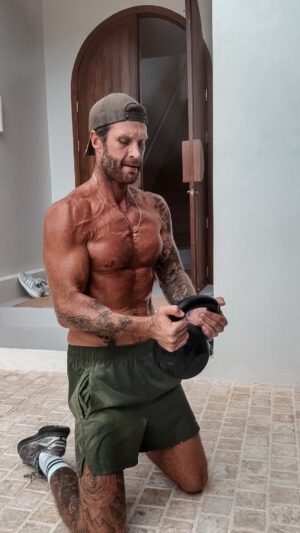
Getting fit after 40 doesn’t require spending two hours in the gym, following a restrictive diet, or completely reorganising your life.
But it does require a plan.
Between work, family responsibilities, long commutes and everything else life throws at you, finding time to train can feel almost impossible.
I understand that. I’m a dad of two, I run a fitness business, and I’ve spent years figuring out how to make training work around real life.
One thing I’ve learned is that fitness doesn’t have to consume your life to transform it.
If you’re wondering how to get fit after 40 when you’re already struggling to find enough hours in the day, here’s where I’d start.
Quick Answer: How Do You Get Fit After 40?
To get fit after 40, focus on consistent resistance training, regular cardiovascular activity, sensible nutrition and adequate recovery.
You don’t need to train every day. For many busy adults, three well-structured full-body strength sessions per week can be a practical foundation, supported by walking and other activities you enjoy.
The key is choosing a routine you can sustain and gradually improve, rather than chasing an unrealistic schedule.
Why Getting Fit After 40 Can Feel More Difficult
There’s a common belief that turning 40 automatically means your body starts falling apart.
I don’t buy into that.
Yes, aging can affect muscle mass, recovery and physical capacity over time. But many people in their 40s are also dealing with something far more immediate: a lifestyle that makes staying active difficult.
You might spend most of the day sitting at a desk, followed by an hour in traffic.
You get home, help with the kids, eat dinner and finally sit down.
The last thing you want to do is drive to a gym.
Before you know it, another week has passed without training.
It’s not necessarily that you’ve lost your ability to get fit. You may have lost the routine that once made fitness a normal part of your life.
That’s an important distinction, because routines can be rebuilt.
Stop Waiting for the Perfect Time to Train
One of the biggest mistakes busy people make is believing they need a completely free hour before a workout is worth doing.
They look at their calendar, see meetings, school runs, travel and other commitments, and decide there simply isn’t enough time.
So they do nothing.
But a focused 30-minute session can still be productive.
You can train your legs, upper body and core using bodyweight movements, dumbbells, kettlebells or resistance bands.
You don’t need to spend 20 minutes driving somewhere, another 15 minutes waiting for equipment and then an hour training.
For many people, removing those barriers is what makes consistency possible.
The goal is to make training fit your life, not build your entire life around training.
How Much Exercise Do You Actually Need After 40?
The World Health Organisation recommends that adults aim for 150-300 minutes of moderate-intensity aerobic activity per week, or an equivalent amount of vigorous activity, alongside muscle-strengthening activities involving the major muscle groups on at least two days.
That doesn’t mean you need to complete all your exercise inside a gym.
Walking, cycling, swimming, running and recreational sports can contribute to your aerobic activity.
Strength training can happen at home, outdoors or in a gym.
A practical starting point might be three full-body resistance sessions each week, supported by regular walking.
You can then build your activity levels based on your fitness, recovery and available time.
A Realistic Full-Body Training Plan for Busy Adults Over 40
If your schedule is packed, I prefer keeping training simple.
Instead of dividing your week into complicated muscle-group splits, full-body workouts allow you to train the major movement patterns without needing to exercise every day.
Here’s an example of how you could structure three different sessions.
Workout A: Build Your Strength Foundation
Start with a short warm-up, then work through:
– Goblet squats: 3 sets of 10-12 repetitions
– Push-ups: 3 sets of 8-15 repetitions
– Dumbbell or resistance-band rows: 3 sets of 10-12 repetitions
– Glute bridges: 3 sets of 12-15 repetitions
– Dead bugs: 3 sets of 8 repetitions per side
Choose resistance and exercise variations that challenge you while allowing controlled technique.
Workout B: Improve Functional Strength and Stability
– Reverse lunges: 3 sets of 8 repetitions per leg
– Dumbbell Romanian deadlifts: 3 sets of 10-12 repetitions
– Dumbbell shoulder presses: 3 sets of 8-12 repetitions
– Assisted pull-ups or resistance-band pulldowns: 3 sets of 8-12 repetitions
– Farmer’s carries: 3 rounds of 30-40 seconds
This session develops strength while challenging balance, coordination, grip and core stability.
Workout C: Strength and Conditioning
– Kettlebell deadlifts: 3 sets of 12 repetitions
– Dumbbell floor presses: 3 sets of 10-12 repetitions
– Step-ups: 3 sets of 8 repetitions per leg
– Resistance-band rows: 3 sets of 12 repetitions
– Side planks: 3 rounds of 20-30 seconds per side
Finish with a short period of brisk walking, cycling or another form of conditioning if time allows.
These are example sessions, not a prescription for everyone. Adjust the resistance, rest periods and exercise variations to suit your ability. Depending on your pace and recovery needs, a session may take longer than 30 minutes.
You can start with fewer sets if necessary and build up over time.
You Don’t Need a Gym, but Equipment Can Help
I built much of my training philosophy around bodyweight exercises and simple equipment.
Not because gyms are bad.
Because I believe people should be able to train effectively wherever they are.
A pull-up bar, kettlebell, pair of dumbbells and resistance bands give you an enormous range of exercises.
You can squat, hinge, push, pull, carry and train your core without relying on machines.
And when you travel, bodyweight training makes it easier to maintain a routine.
The important thing isn’t whether you’re training at home or in a premium gym.
It’s whether your training is challenging enough to help you progress and convenient enough that you’ll actually do it.
Nutrition After 40: Keep It Practical
You can have a great training program, but your nutrition still matters.
If your goal is to lose body fat, you generally need to maintain an appropriate calorie deficit over time.
If you’re trying to build or preserve muscle, adequate protein and sufficient energy are important.
But that doesn’t mean you need to eat chicken and broccoli every day.
Start with the fundamentals.
Include a good source of protein in your meals. Eat plenty of fruit and vegetables. Choose satisfying, minimally processed foods regularly, and pay attention to portion sizes.
Plan meals around your actual lifestyle rather than a diet you can only follow for five days.
If you’re a parent, you shouldn’t need to cook three completely separate dinners just because you’re trying to eat better.
The best nutrition strategy is one you can follow consistently.
Don’t Ignore Your Cardiovascular Fitness
Strength is important, but it’s only one part of physical performance.
You also want to be able to walk uphill without feeling exhausted, run around with your children, play sport and recover comfortably from everyday physical activity.
That requires cardiovascular fitness.
Walking is one of the easiest places to start.
You can walk before work, during a lunch break or after dinner with your family.
As your fitness improves, you might add cycling, swimming, jogging or intervals suited to your ability.
You don’t need every session to be intense.
In fact, combining resistance training with manageable aerobic activity is often a much more sustainable approach than constantly pushing yourself to exhaustion.
Recovery Becomes Part of the Plan
When you’re juggling a career, family and training, it’s tempting to sacrifice sleep to squeeze everything in.
I’ve never believed that constantly running yourself into the ground is a smart long-term strategy.
Sleep supports recovery, physical performance and general health.
Your training also needs to account for stress.
If you’ve had a demanding week, poor sleep or you’re recovering from illness, it may be sensible to reduce the intensity of a session.
That doesn’t mean you’re losing progress.
It means you’re managing your training intelligently.
The goal is to keep improving over months and years, not prove how hard you can push yourself on one particular Tuesday.
The Biggest Fitness Mistakes Busy People Make After 40
Trying to Train Like They Did at 25
Your schedule and responsibilities may look completely different now.
That doesn’t mean you can’t become exceptionally fit. It means your routine needs to reflect your current life.
Doing Too Much Too Soon
Going from no exercise to six intense sessions per week is a common way to make training feel unsustainable.
Start with a manageable workload and build gradually.
Changing Programs Constantly
You don’t need a completely new workout every week.
Repeating key exercises gives you a chance to improve your technique, increase resistance and measure progress.
Ignoring Nutrition
Training is valuable, but it doesn’t automatically compensate for consistently poor eating habits.
Thinking Every Workout Must Be Perfect
Some sessions will be excellent. Others will be shorter or less demanding.
What matters is maintaining a routine over time.
How to Stay Consistent When Life Gets Busy
My advice is to make training as easy to start as possible.
Keep your equipment accessible. Decide when you’re going to train before the week begins. Have a shorter session available for days when work runs late.
And stop treating a missed workout as a reason to abandon the entire week.
If you miss Monday, train Tuesday.
If you only have 20 minutes, use them.
If you travel, adapt your workout to the equipment available.
Consistency isn’t about having a perfect schedule.
It’s about continuing to show up even when your schedule isn’t perfect.
Frequently Asked Questions
Can you get fit after 40 if you haven’t exercised in years?
Yes. Many adults can improve their strength, cardiovascular fitness and physical function after periods of inactivity. Start at an appropriate level and progress gradually. If you have relevant medical conditions or concerning symptoms, seek professional medical guidance before starting demanding exercise.
Is 30 minutes of exercise enough after 40?
Thirty minutes can be enough for a useful strength or conditioning session, particularly when the workout is well structured. Your overall weekly activity, training intensity and goals still matter.
Is it better to do cardio or weights after 40?
Both offer important benefits. Resistance training helps maintain and develop strength and muscle, while aerobic exercise supports cardiovascular fitness. A balanced routine usually includes both.
Can you build muscle after 40?
Yes. Resistance training can improve muscle strength and size in adults over 40. Appropriate progression, nutrition and recovery remain important.
Do you need a gym membership to get fit after 40?
No. Bodyweight exercises, kettlebells, dumbbells and resistance bands can provide effective resistance training. Walking, cycling and other activities can help develop cardiovascular fitness.
How long does it take to see fitness improvements after 40?
That depends on your starting point, training history, nutrition and consistency. Some improvements in exercise performance can occur within weeks, while noticeable changes in body composition often take longer. Focus on sustainable progress rather than a fixed transformation deadline.
Final Thoughts: Build Fitness Around Your Life
If there’s one thing I want people to understand about getting fit after 40, it’s that you don’t need to choose between your health and the rest of your life.
You can have a demanding career.
You can be a present parent.
You can enjoy your weekends.
And you can still build a strong, athletic and capable body.
The solution isn’t necessarily finding more hours in your day.
It’s making better use of the time you already have.
Train intelligently. Eat sensibly. Prioritise recovery. Stay consistent.
Fitness should give you more energy and freedom to enjoy your life, not become another source of stress.
That’s the philosophy behind Bodyweight Built.
If you want structured functional training programs and practical nutrition guidance designed to fit around real life, explore Bodyweight Built at https://www.bodyweightbuilt.com.
If you’re a busy man over 35 looking for a more personalised approach to rebuilding your health, fitness, and performance, you can also explore my private coaching at mattcfox.com.
You don’t need to start perfectly.
You just need to start.
You May Also Like…
Progressive overload is the key to getting stronger. Learn how to progressively challenge your body without constantly changing your workout or needing a gym
odyweight training is more than push-ups and squats. Learn how to build strength, muscle, mobility and fitness with minimal equipment and a smarter approach to training.
Feeling tired all the time after 40? Discover the biggest causes of low energy in men and the practical changes that can help you feel stronger and perform better.
0 Comments